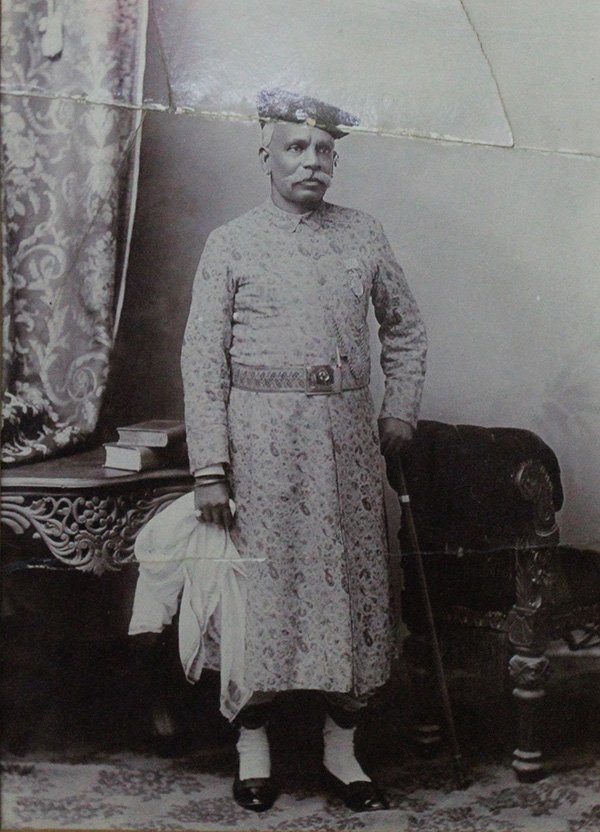
Sir Mohinder Dhillon, pictured on the deck of British Navy ship. Kenya. 1967
Image and Text contributed by Sir Mohinder Dhillon, Kenya
The following text is a summarised and edited version of excerpts from an unpublished Autobiography of the contributor.
Looking back over the 80 years, I wonder how, as a simple village boy from Punjab who never even finished school, did I end up in Africa, dodging bullets to make a living from shooting hundreds of kilometres of film in some of the world’s most dangerous regions.
I come from the proud martial family of the Sikhs. I do not know the exact date of my birth, although my passport says 25 October 1931, Baburpur, Punjab. At the time, births were not registered, and parents habitually exaggerated the ages of their children in order to get them into school early and so have their own hands free during the day. Baburpur, formerly called Retla (the place of sand), was renamed after Mughal Emperor Babur who had reportedly camped near our village for a few weeks.
My father, Tek Singh-
My father, Tek Singh, was the first person in our village to get an education. He was an adventurous man, and in 1918 at the age of 17, he responded with enthusiasm to the recruiting posters for workers on the Uganda Railway in British East Africa. Believing that there was safety in numbers, he was joined by friends and former classmates from nearby villages and the determined young men collectively took up the challenge of seeking a better life abroad.
This grandiose project of Uganda Railways would change the lives of the tens of thousands of Indians who left home for a new life in an unknown land, most of them never to return. The so-called Lunatic Line laid between 1896 and 1901 from Mombasa into the interior of then-British East Africa to Lake Victoria and subsequently extended into what is now Uganda, opened up the East African hinterland to the outside world. The founding of towns, and their later development into cities, would go on to transform the economies of the region.
When Tek Singh announced his decision to go to East Africa, it upset my grandparents immensely. Their only son was going to ‘darkest Africa’, the prevalent view of Africa at the time (still the perception of many people today). The money for my father’s first train ticket to Bombay, and for the dhow that would carry him from there to Mombasa, was borrowed from a moneylender in the village at a steep interest rate.
For the young Tek Singh leaving the village was more than just an adventure. A great deal rested on how he would fare in distant East Africa. Back at home in India, his family would be depending on him for remittances. He also had young wife to think of. His marriage had taken place six years earlier, when Tek was just 11, and his betrothed, Kartar Kaur, was nine years old.
The railway journey from Babarpur to Bombay took two days and one night. And then it took another two days to find the Uganda Railway’s recruiting agent. His shopping list for the journey – then the cheapest way of crossing the Indian Ocean – included a charcoal stove, two bags of charcoal, all the rations needed for the journey, a sleeping mat, blankets, washing powder, bath soap, tea leaves, and fresh water.
Tek Singh – or Bau Ji, as he was fondly called at home – arrived in Mombasa with almost no money in his pockets. He found refuge at a nearby Sikh temple (Gurudwara), where he slept on the veranda braving the ravenous mosquitoes, exactly like how the thousands freshly arrived on the coast spent their first few nights. After a week, Bau Ji was provided a bachelor accommodation by the Uganda Railways. Later, he and two other young Sikhs shared a small railway house that had the luxury of a tiny garden. The trio of bachelors remained life-long friends.
Bau Ji had promptly written home, informing his parents of his safe arrival. The mail though travelled first by sea, and then by rail and horse-drawn carriage and by foot, and took as long as 12 weeks to arrive. By then, his parents had feared the worst. His wife, Kartar Kaur, for her part, was obliged to don widow’s attire (the customary white dress), and was forbidden to use cosmetics. She complied for form’s sake but Kartar refused to believe that her husband was not alive. Amid the uncertainty of my father’s absence, my grandfather Natha Singh lived long enough to hear that his son had indeed reached East Africa safely, but the suspense evidently proved too much for his health. When Bau Ji’s letter finally arrived, the family was overjoyed and distributed sweets to everybody, but my grandfather died shortly after that.
Bau Ji found himself working for a soon-to-be expanded colonial rail (and shipping) network, one that would come to be known, first as Kenya & Uganda Railways and Harbours, and then eventually (in 1948) as the East African Railways and Harbours Corporation. Almost 30 years would elapse before he felt he was ready to bring the rest of his family over to Kenya. Through the 30 years, Bau Ji had to be content with getting to see his family during periods of extended overseas leave. He was entitled, once in every five years, a ‘six month home leave’ in India. All but one of the rest of us seven siblings were conceived during successive home-leave visits from our father. My youngest brother Balbir was born in Kenya. Bau Ji was able to save money for the education of all six of his sons, including me. Later, Bau Ji sent money to build a primary school in our home village.
Although the India Bau Ji had left behind was riven by class divisions, the world to which he now belonged bore even sharper lines of demarcation. The less educated Sikhs, those who were good with their hands, became mechanics, masons and carpenters. Only well-educated Sikhs could expect to land responsible office jobs. Most of the Railway accountants and clerks were Goans, who also ran the catering department. The people from Goa, who had lived under Portuguese rule for more than 500 years, did not mix much with other Indians. They classified themselves as Portuguese. And they already had their own sports club, known as the Railway Goan Institute. There were very few Gujarati-speaking Indians working on the Railway. Some Sikhs left the Railways to venture into business, but it was rare.
Bau Ji, for his part, had very little time for any kind of life beyond the Railway. He would walk the 10 kms to work from his Railway quarters. He and his two friends Kishen Mangat and Basant Bindra were encouraged by the British Administration to form a Sikh hockey team so a hockey field and a modest clubhouse were duly built. It went on to become the Railway Asian Institute Sports Club. After work, he would walk back home, have his tea, then change into his running-shorts and pick up his Indian-made hockey stick to hone his hockey playing skills.
Our lives in Baburpur -
I spent my early childhood in much the same way as my father. We never travelled outside our district in Punjab. There were no road or rail connections nearby. The Television was yet to be invented and I did not even know that radios existed. I first saw a camera when we all travelled to Ludhiana in 1947 to have our passport pictures taken. The camera was one of those contraptions with a black shroud underneath which the photographer’s head would momentarily disappear. There were no newspapers or magazines from which to learn about the world outside Babarpur. While in India, I had never heard of Mahatma Gandhi. Not until 1948, when I was in Kenya, would I hear about Gandhi for the first time – and that was only because he had just been assassinated.
Some of my friends are shocked when I tell them that my main hobby in the village was cock-fighting. I was the proud owner of a champion white cockerel named Raja, or ‘king’. Raja was fed on almonds and garlic, which made him a formidable fighter. We couldn’t afford the luxury of eating almonds. But for Raja, I would settle for nothing less. Before Raja went into battle, I would fit needle-sharp steel caps over his fighting-spurs – the talons on the inner side of a cock’s leg. In their natural state, a cock’s spurs are sharp enough. But kitted out in steel spikes, Raja could strike deep into an opponent’s belly, killing that poor bird almost instantly. Talking about this makes me wonder how I could have been so cruel. Back then, however, as a 12-year-old, I got a great kick out of all this. Raja slept next to my bed, I was so proud of him. My other passion was kite-flying. Together, brother Joginder and I won the championship for both of our last two years in the village.
Leaving India -
Things began to change for us in April 1947 the announcement of our impending departure had come in a letter from Bau Ji, received in September 1946. Leaving for Africa just weeks before India got its independence did at least spare us the carnage of Partition. When we left, India was still a peaceful place. Yet, within just a few months of our departure, some two million Indians were to lose their lives.
The first time I stepped on to a train was in 1947, at the age of 16, when we were leaving India. It was in the same year that I first travelled by bus. This was a time when, for the first time ever, Indian national election campaigns were canvassing the villages. The year 1947 was thus a significant one in my life. Until then, I had passed my entire childhood without ever having seen either a car or a motorcycle. I saw a flush toilet for the first time only after we travelled to a nearby town to be immunised against smallpox and to receive our yellow-fever vaccinations.
First, we travelled by ox-cart to Malaudh, the small town nearest to Babarpur where I had been going to school. With Partition looming, electioneering was under way in earnest, new buses were being used to mobilise political support among rural populations. From Malaudh, we took a bus to Ludhiana. This was only the second bus I had ever travelled in..From there, we boarded the train for Bombay.
In Bombay, we found a cheap hotel, where – in order to cut costs – the whole family shared one large room, with the males in one corner and the women in another. In the floor of the room there were holes through which, peeping down, we could see parts of the room beneath. Like all Indian travellers in those days, we carried all our own bedding in a sturdy canvas roll, complete with thick leather straps, a leather handle and a special pillow compartment. The bustle of Bombay – the first big city I had ever seen – was overwhelming. On reaching a street, I’d just stand there, transfixed, sometimes for at least three minutes, not daring to cross if there were a car approaching, even from afar. Bombay was simply awe-inspiring.
In India, there were – even then – bribe agents or ‘facilitators’ everywhere to smooth your passage through the formalities of customs and immigration and to find suitable accommodation for you. At the Bombay seaport, a bribe had to be paid for every service that was rendered. We even had to bribe someone in order to establish who else needed to be bribed. Our bribe agent then made sure that we bribed all the right officials.
The ship, named the Khandala, was dirty and worn. Originally a coal carrier, it had been converted to service as a passenger liner. The journey took 14 days. We docked briefly at two ports along the way, Porbunder in Gujarat and Mahe in the Seychelles. Then one day we saw the lighthouse of Mombasa. A tugboat came out to meet us and escorted our ship through a narrow bay into the port. The Africa I arrived in was green and lush. Palm trees swayed in the breeze against a clear blue sky. What a marked contrast this was to the flat and dusty Punjab we had left behind.
As we approached the shore, I knew I had come to a wondrous land. There were large engineering cranes at work in the harbour. The first human beings who caught my eye on the shore – two white men wearing shorts and a white woman in a loose skirt – were doing something curious. They were swinging sticks up and down. Later I found out it was golf. There were Africans, Arabs, Swahilis and even a few Indians and Europeans. We were astonished by how cheerful and laid-back everybody seemed to be. Most of the people we had seen on the streets of Bombay, by contrast, had looked tense and miserable, as they rushed about from place to place.
After Babarpur, our modest Railway house in Nairobi had the look of a palace. Gurdev, my elder brother soon found a job as a Railway fireman. For two years, he fed coal into the burners of the steam-engines and he would come home with soot all over his face and on his overalls. After a two-year apprenticeship, he became a locomotive driver.
In India, we had been punished for everything in school – for poor grades, for failing to complete our homework, for showing up a few minutes late, even for laughing aloud in class. For a village boy used to squatting on a coarse jute mat on a hard, uneven cement floor, this was a luxurious learning environment. Most of the teachers in Nairobi were surprisingly lenient, moreover, they did not punish for failure, or for lagging behind, but only for behaving badly in class.
Outside of school, life was filled with excitement. We drank sticky soda pop and we begged for turns to ride the bicycles of our friends. I played billiards, snooker and skittles at the Railway Club. At school, we played hockey and table-tennis. Indeed, we became such dab hands at table-tennis that my brother Manjeet and I went on, in 1954 and again in 1955, to contest the final of the Kenya National Table Tennis Championship. I won the first encounter, but Manjeet took the second.
Bau Ji was himself an avid sportsman. His love of hockey in particular was to infect my younger brother, Joginder (Jindi), who went on to be selected as part of the national hockey team that represented Kenya at the 1956 Olympics in Melbourne, Australia.
Joginder was sent to the prestigious St Thomas’s Teaching Hospital in London, where he eventually qualified as a doctor. Having then just represented Kenya at the Olympics, Joginder had easily found a place at the teaching hospital. Inderjeet went back to India, to a boarding college in Ludhiana, as Bau Ji could not afford to send him to a school in England. Later, upon returning to Kenya, Inderjeet became a popular radio and TV personality with the Kenya Broadcasting Corporation, and was for a while a heartthrob among the teenage set in Nairobi. Manjeet initially took up a job in Nairobi as a clerk in the Kenya Ministry of Works, before going into business. While at school, he received a shield from Queen Elizabeth’s sister, Princess Margaret. He was also awarded the Lord Mountbatten Boy Scouts’ Belt. All five of my brothers passed their ‘O’ level examinations. I was the sole exception, failing the exam.
A career in images -
One day Bau Ji gave me a basic, second-hand Box Brownie camera. Bought at a stock-clearance sale, it had cost him 25 shillings – the equivalent, then, of about US$ 3.50. This was the ‘poor man’s Rolleiflex’, with a fixed speed and fixed aperture. Neither he nor I knew it at the time, but this simple gift marked the beginning of a 60-year-long career in photography.
In the 1950s, in a prestigious international photographic magazine, I came across a photo essay by the Indian photographer, I.S Johar. His were pictures taken with a Box Brownie of landscapes featuring dramatic skies. Of course, all Johar’s images were in black-and-white, as colour film had yet to appear. His images, though, were a revelation to me. Taking my cue from Johar, I started using a yellow filter for all my outdoor pictures, and an orange one at times, for special effects.
My first photographs were of the Indian hockey team’s first to visit Kenya, early in 1948. In the team was the maestro Dhyan Chand, winner of three Olympic gold medals. Other great players I remember from that team were K S Babu, Manna Singh, the barefooted Peerumal and the South Indian Raju, as well as the two Anglo-Indians, R S Gentle and Claudius. For players with such an awesome reputation, all were astonishingly unassuming and gracious. None so much as batted an eyelid on being ambushed by me before a match with requests for their portraits. “Dhyan Chand,” I’d say, “Just stand there a minute, would you?” And the great man would duly oblige.
I could not afford to take my film off to a photographic studio for processing, so I learned to process film myself, in a small, makeshift dark room that I improvised in the windowless storeroom at our Railways house. I purchased developer powder and other chemicals from a studio in town. From that studio, I also borrowed a thin handbook, published I think by Britain’s Royal Photographic Society, entitled Photography Made Easy for Learners, which had detailed instructions on how to set up a home-processing lab.
I did not have an enlarger, so the photographs I produced were tiny, measuring just 2.25 by 3.25 inches. With no electric drum-dryer either, I would dry the wet pictures by slapping them on to the window panes in the kitchen, after washing down the glass with Lifebuoy soap. “Mohindri, that’s expensive soap,’ my mother or my sister would chide me. There was some friction, in that kitchen, between the cooks in the family and me, over my encroaching photographic activities. “A kitchen,” I was roundly informed, “is for cooking in – not for making pictures.”
My new-found joy at having discovered the wonders of photography did little to calm the guilt feelings that by now were haunting me. Here I was, a grown man of 20 without a job, still sponging off his parents at home. Having flunked my ‘O’ Level exams, I was beginning to feel anxious I might never find a meaningful job.
So one morning I plucked up enough courage to respond to one of the newspaper advertisements. The vacancy in question was for ‘a junior accounts clerk in an established pharmacy practice’. To my surprise, I received a notification that I was to come in for an interview. At the appointed time, I was shown into the office of the proprietor, an elderly Jewish woman called Edith Haller. I had heard of Ms. Haller, as she also owned one of the photographic studios in the town. Indeed, in those days most retail chemists operated a photographic service as well –where customers could hand in their exposed film and later collect the developed prints.
My formal interview with Ms Haller was mercifully brief. In short, my candidacy for the post of accounts clerk at the pharmacy was rejected almost at once. “What we need is a qualified bookkeeper,” Ms Haller explained. I was not unduly surprised but this time my frustration got the better of me and I nearly broke down in tears. In the doorway, as I was leaving Ms Haller’s office, I spun around suddenly. “Halle Studio,” I blurted out. “What about Halle Studio? Isn’t there something I can do there?” I told her about the little dark room I had established at home. I offered to bring in and to show her some of my photographs. I pleaded with Ms. Haller to be given a chance. She must have been utterly taken aback by my torrent of broken English, by my gangly appearance, by my ill-fitting, lop-sided turban. This was the first time I had ever addressed a white person at any length.
Ms Haller’s eyes lit up while I was talking. There and then, once I had said my piece, she told me she would put me on one month’s probation, starting immediately. From the moment I reported for duty, I was determined to show I was both capable and eager to learn. That job meant everything to me. My trainer Peter Howlett, although he did not say so, left me in no doubt that my brown skin might present a bit of a problem. Ms. Haller nevertheless confirmed me in my post at the end of the month-long probation period, for which I was paid 150 shillings (the equivalent, then, of about US$ 21). She also raised my monthly salary to 250 shillings (roughly US$ 35). I was mightily relieved and grateful; for now, at last, I had a proper job.
At the time, Kenya’s only daily newspaper, the East African Standard, did not have any staff photographers of its own. Instead, the paper relied on photographers hired from Halle Studio for its pictures of all events. Peter Howlett, the man who had been given the responsibility of training me – was Halle’s principal photographer and handled most of the commissions.
One line of work that kept Halle Studio very busy was photographing babies at their parents’ homes. Peter specialised in taking informal portraits of the babies using a single flash and it was my job to hold the flash unit. The unit was a very large, heavy box, separate from but wired up to the camera. I had to lug this box around, directing the flash at different angles so as to avoid casting an ugly shadow while Peter clicked away. Peter and I made a very successful team. We got many requests from proud young parents, while also going from door to door around some of the more affluent Nairobi suburbs, promoting our ‘Home Photography’. The response we received was generally enthusiastic, and before long we had an extensive customer base – and an impressive album of sample baby pictures.
We were also hired to take pictures of horse races, dog shows and other social events. As a colonial newspaper, the East African Standard – which commissioned most of these photographs – catered exclusively to the tastes of Kenya’s ruling British elite. One day, while Peter was away on holiday, the newspaper’s social editor, Lesley Clay, rang the Studio, requesting the services of a photographer. I took the call and offered to stand in for Peter. Ms Clay readily agreed to take a chance on me. “In a worst-case scenario,” she added, encouragingly, “we can probably do without a picture.” It turned out that Lesley wanted me to cover a horse show.
Ms. Clay was delighted with my photographs. Even I, when I processed and developed the pictures, was pleasantly surprised by how well they came out. This time the picture taken by Rolleiflex camera, and a 8×10 inch size was a magical thrill. This was the beginning of a long relationship with the Standard newspaper. Two dynamic white women – Ms. Haller and Ms. Clay – were thus responsible for both of the early breakthroughs in my career as a professional photographer.
With Lesley I attended countless society functions at which she would introduce her paper’s turbaned Sikh photographer to individual party guests. All were white, of course, and many would simply turn away on being introduced to me, shunning my presence.
The newspaper work kept me busy for years, until eventually the Standard employed a staff photographer, John Parry from England. In those days, the paper paid us peanuts for our photographs. The going rate was just five ten shillings (the equivalent at the time of about $ 1.20 60 US cents) per column-inch.
When the British declared a State of Emergency in Kenya in 1952, the Mau Mau struggle became the big news story. We took photographs of the brutal ‘screening’ of Africans in the streets; of detainees in the Manyani Camp; of British troops and supplies arriving at the Eastleigh Airport. I was not mature enough then to take in fully what was going on around me, even though this period was one of the most politically charged in the country’s history. The awakening of my political consciousness would come later, when I took photographs of the Hola Camp Massacre in 1959. It was when the real horrors of this conflict start to hit me.
Halle Studio -
In 1954, Ms. Halle fell ill, and her brother Arthur Haller, who was then the Government Maize Controller, persuaded me to buy the business from her. He even went so far as to find me a partner, in the person of Oded Katzler, a wholesaler of cardboard packaging. Katzler raised all the capital – amounting to the then formidable sum of 20,000 shillings. At first, Oded remained a sleeping partner in the business, but after 10 months I was able to buy him out. Upon acquiring Halle Studio, I immediately relocated the company to a rented first-floor office suite in central Nairobi. This was in Nairobi House, the historic building then located on the corner of Delamere Avenue and Government Road (now Kenyatta Avenue and Moi Avenue). The work was exciting, and although it did not pay well I was happy enough at the time, as I had developed a taste for photo journalism and news reporting. As time went by, my professional photographic assignments started taking me further afield. Increasingly, I was called upon to cover safaris and expeditions in remote parts of the country.
Ambi -
One evening in May 1958, my father – after coming home from work as usual – told me that he had some “wonderful news” for me. “Mohinder,” he said, “you are getting married.” Just like that.
Amarjeet Kaur Sandhu, known throughout her life as Ambi , was born in Kisumu, on the Kenyan shores of Lake Victoria, on September 20, 1940. She was educated at Kisumu Girls School, although, like me, she did not progress beyond ‘O’ Level. Bau Ji, for his part, was pleased to learn that Ambi had played tennis at school – at a time when Sikh girls were, for the first time, being allowed to play sports – was a strong point in her favour.
After our marriage, Ambi was not only conversant with all the studio’s day-to-day functions; she was also taking most of the passport, driver’s licence and ID photographs herself. This left me free to take on newspaper assignments at a moment’s notice. The result was that business at the studio picked up dramatically.
In those pre-Independence days, our bread-and-butter income came from a deal we had with the British Army to take ID photographs of its soldiers serving in Kenya, many of them then trying to suppress the Mau Mau uprising. On at least six days every month, whole lorry-loads of British soldiers would be dropped off to have their pictures taken. Sometimes, the queue would extend down the stairs on to the ground floor of Nairobi House and out into the street. Ambi would sometimes take pictures of more than 300 British soldiers in a single day.
Ambi loved working at the studio. She loved the busy days especially, when streams of people would walk in to have their pictures taken or to collect their prints. She made friends with other tenants in the building, whom she spoilt with her home-made samosas, earning her the nickname ‘Samosa Lady’. The work set Ambi apart from former school friends of hers, some of whom were now also newly married and living in Nairobi, but who – as housewives, most of them – had only limited interaction with the wider Nairobi public. Ambi never criticised her married former school friends openly, but she did, in private, after meeting up with them at weekends, “I am far too busy,” she used to say, “for all this idle chatter” finding the closed world of their incessant society gossip exasperating.
With Ambi at the studio, I could devote myself almost exclusively to news photography, initially for the East African Standard, and then – increasingly – for UPI and other international press agencies as well. Come 1959, I was spending less and less of my time in the studio, as assignments would call on me to leave Nairobi to cover events elsewhere in Kenya and throughout East Africa. When, in 1960, I began covering events across the whole of Africa, I would be away for lengthy periods, leaving Ambi to ‘hold the fort’ at Halle Studio. Having acquired a passion for photo-journalism, I had become ambitious. So, in 1959, I wrote to Planet News Photos (subsequently taken over by United Press International, UPI) asking if this international agency might consider taking my pictures. The reply I received was surprisingly short and to the point: ‘Yes, Please’ – just the two words; no further explanation required; no demands; no doubts even over whether I could deliver photographs of the desired standard. This stunning breakthrough would prove the making of my company Africapix Media Limited.
Mohinder Dhillon (Founder and CEO of Africapix Media Ltd.) was the first photo and TV journalist to capture the plight of Iranian Kurds behind Khomeini’s lines. His first pictures shocked the world generating a lot for sympathy of Kurdish sufferance. He was knighted by the Order of Saint Mary of Zion during a ceremony at the Royal Artillery Headquarters in Woolwich, U.K. on November 12th 2005. “The honors were conferred upon those who had made significant contribution to the society.
His films of Ethiopian famine finally moved the world into action resulting in one of the biggest famine relief operations in history. Relief planes from dozens of countries descended on little dirt air strips of Ethiopian countryside round the clock as if they were Heathrow or JFK airports. The very first pictures of the terrible Ethiopian famine was the combined effort of Mohinder Dhillon and Michael Buerk of BBC TV to gain entry into tightly controlled military ruled Ethiopia in 1984 opening the door for rest of the media and rest of the world.
May 21, 2013 | Categories: 1910s, 1947 India Bangladesh Partition, 1960s, Accolades & Awards, Achievements, Adventure, Apartheid, Arranged Marriage, Boat, Books, British Reign, Bus, Child Marriage, Cock Fowl, Commerce, East Africa, Education, English, Ethnicity, First of a kind, Food & Drink, Friendships, Future icons from the Past, Halle Studio, Hockey, House of their dreams, Kite flying, Knighthood, Latest, Men's Clothes, Migration, Noteworthy Journeys, Photo Studio, Photographer, Photography, Pre-Independence, Punjabi, Punjabi, Punjabi, Racism, Rags to Riches, Railways, Relocation, Ship, Sikhism, Smallpox, Urdu, Vehicles & Transportation, Violence, Wartime Separation, Western Clothes, Widower, Women Empowerment | Tags: 1960s, Africapix Media Limited, Babarpur, BBC, Bombay to Africa, Bribery, British East Africa, Brownie Box, Dhyan Chand, East Africa, Edith Haller, Ethiopia, Famine, Halle Studio, Hockey, Hola Camp Massacre, ID photographs, Immunisation, Indian hockey team, Indian national election campaigns, Iranian Kurds, Kenya, Kenya Broadcasting Corporation, Kenya National Table Tennis Championship, Khandala, Kite Flying, Knighthood, Manyani Camp, Mau Mau, Michael Buerk, Mombasa, Nairobi, Olympic gold medals, Olympics, Punjab, Rolleiflex camera, Royal Photographic Society, Sam Dhillon, Ship, Sir Mohinder Dhillon, Small pox, Uganda Railway, yellow Fever | 2 Comments »

My Parents, K. M. Devaki Amma & Lt. Cdr. P.P.K. Menon. Bombay. Maharashtra. 1941
Image & Text contributed by Radha Nair, Pune
This photograph of my parents K. M. Devaki Amma & Lt. Cdr. P.P.K. Menon was taken at a Photo Studio in Bombay in 1941, soon after they were married. My father was based in the city serving the Naval Force.
My mother, K. M. Devaki Amma belonged to Feroke, a part of Kozhikode in Kerala. Her initials K. M. stood for Kalpalli Mundangad and her family originally belonged to the Anakara Vadkath lineage. The large joint family of more than 25-30 people lived in a house called Puthiyaveedu which still exists in Feroke, however the members are now settled in far flung places and my grand aunts and uncles are no more.
My mother had to give up school very early in life. She came from a large family of 14 brothers and sisters and belonged to an era where a girl’s formal education wasn’t a priority. While they grew up under the tutelage of grand uncles and aunts, they learned to cook, clean, and learnt to make do with and share whatever little they had with their siblings without ever complaining. Congee (Rice Gruel) was what they mostly had for lunch and dinner, supplemented with a little coconut chutney, and may be a side dish of some green banana, but only if they were bestowed with a ripe bunch of plantains available from the kitchen garden.
My mother and her sisters’ daily life entailed preparing food for all members of their very large family. By the light of a wick lamp, sweating by the blaze of crackling coconut fronds they would wash dishes with ash from the kitchen hearth and rinse them with water drawn from the well. My mother in personality was very self-reliant and was happy with whatever little she had.
Arranged by my paternal grandmother, when Amma married my father, a man with an aristocratic lineage and a Naval officer, my father’s cousins would scoff at her and condescendingly regard her as a ‘village girl’. They had been educated in Queen Mary’s Women’s college, Madras (now Chennai) whereas my mother had studied only up to Class IV in a local village school in Karrinkallai.
Undeterred, my father, who knew his wife was a bright and intelligent woman took her under his wing and brought out the best in her. He taught her English and bought her abridged versions of books written by Charles Dickens, Walter Scott and many other great authors. He read out passages to her and patiently explained to her what they each meant.
Thus Devaki, my mother, slowly emerged from her rural background, and became a lady endowed with great poise and charm. Not only did she steal my father’s heart, but even of those who befriended her. She became a much sought after friend by wives of both British and Indian naval officers. She taught them to cook Malayali dishes and stitch & embroider; skills, which were executed by her exquisitely. She wrote and spoke English with such assurance that she could put a present day Post Graduate in English to shame. But despite all these changes, she remained loyal to her roots, proud of her humble origins, and very attached to her siblings.
Sometimes, deep into the night I would catch whispers of my parents’ conversation as they sat and planned the monthly budget, and spoke about their dreams of providing us with the best of every thing. It was my mother who insisted that my sister and I be given the best education they could afford. She firmly refused a State Board SSC education, and insisted on us being admitted into schools which followed a Senior Cambridge syllabus. She was efficient and fiercely independent. By comparison I was a pale shadow. In fact, many times I used to feel very unsure of my self in her presence, intimidated by her indomitable spirit and the complete control she had over any situation.
When my father was suffering Cancer, she stood by him; nourishing him with love and healthy food, while my sister and I watched our father’s condition worsen by the day, helpless and often giving in to tears. My mother always remained calm, but only when he breathed his last in 1977 did she break down completely. He was her life force, and she was his guiding light. Theirs was an extraordinary relationship, always supportive of each other at all times and completely committed to each other till the end.
After I graduated, it was her dream that I put my education to good use. However, a few years after marriage when I was forced to give up my teaching post, she never forgave me till she breathed her last. To make up for it, I began to write and put together a collection of short stories, but the book never got published.
What pained me most was that I was not able to place a copy of my book in my mother’s hands and make my peace with her before she passed away in 2008.
Apr 23, 2013 | Categories: 1940s, Arranged Marriage, Attire, Bombay, Cancer, Condiments, Domestic Skills, Dressed for an Occasion, Education, English, Fashion Accessories, Food & Drink, Fruit & Vegetables, Furniture, House Wife, Illiteracy, India, Interiors, Jewellery, Kerala, Literacy, Material, Men in Uniform, Men's Clothes, Military, Photo Collection, Photo Studio, Picnics & Feasts, Pre-Independence, Previous, Prints & Stitches, Props, Rags to Riches, Royality, Sarees, Specialised Clothing, Studio Backdrops, Studio Portraits, Women Empowerment, Women's Clothes | Tags: 1940s, Anakara Vadkath, Bombay, Budget, Cambridge, Chennai, Couple, Dreams, Education, Hair Styles, House Wife, Indian Navy, Jewellery, Joint Family, K. M. Devaki Amma, Kalpalli Mundangad, Kerala, Literacy, Lt. Cdr. P.P.K. Menon, Madras, Maharashtra, Marriage, Men's Clothes, Naval force, Photo Studio, Props, Puthiyaveedu, Radha Nair, Regret, Sarees, Shoes, Studio Backdrop, Studio Portraits, Syllabus, village girl, Women Empowerment, Women's Clothes | 5 Comments »

My Letter to Jean Christophes. Bombay. August 10, 1972.
Letter & Text contributed by Denzil Smith, Bombay
This letter carries with it an amazing story that always has me grin ear to ear with joy.
My family are Anglo Indians and until a few years ago lived in a family bungalow in Ville Parle in Bombay. My father Benjamin John Smith was a Customs officer in Bombay and perhaps one of the few honest black sheep amongst the white embroiled in dishonest deeds. To get relief from tough days at the office, my father would find release with music. He was adept at both reading and writing music, played several instruments and when opportunity called he even travelled with the famed Paranjoti Choir all over the world.
At one such opportunity he travelled to Tours in France with the choir in 1966. The members of the choir were usually put up by local classical music aficionados at their homes in each city; and a certain Dr. Boulard and his family were to be my father’s kind hosts in Tours.
The day my father reached the Doctor’s mansion, eagerly awaiting him at the gate was the Doctor’s son, a 6 year old French boy, Jean, who had waited for my father in anticipation of seeing an Indian for three whole days.
At first sight and to his shock the boy ran inside and wept copiously to his father, complaining “Where are his feathers!?” Clearly my brown father in a suit and tie was not the “Indian” he was expecting.
Despite the initial disappointment, my father and Jean became very fond of each other and when he returned to India, dad told me that Jean reminded him of me, that I would really get along with him, and Jean would write to me and I should reply. Jean and I soon embarked on establishing a pen-pal relationship writing letters to each other. I was curious about France and he about India and our lives. He would write me in French and I in English. Finding a french translator in Bombay at the time not an easy task but I had one at home, my father. Later Jean began writing in English which he was learning while studying to become a Doctor.
Over the years we wrote several letters to each other. In some letters I would find that Jean had packed in half used pencils and I always wondered why he would send me those as presents. As time passed, somewhere through those years our letters became infrequent and we lost touch.
Many years later in early 2011, I was travelling with a theatrical production all over Europe and also to Tours. I remembered Jean and pestered my manager to trace his whereabouts. All I knew about him was that he had become a Doctor and his parent’s address that was well etched in my memory.
Before our performance in Tours, my manager took me aside to say he had a surprise. Back stage was not Jean as you would expect but his mother, Mrs. Boulard who spoke with me in French via a translator. I could tell she was cautious about me and wasn’t about to start believing my stories about some letters and my friendship with Jean until I mentioned a family fact that very few people knew about. Astounded, she suddenly broke into English, albeit still a little cautious. She wouldn’t reveal her son’s whereabouts; instead she insisted that I leave my number with her, for her son to return the call.
With no news from Jean, and ready to leave to perform the play in Le Mans, a city 200 Kms away from Paris, I finally received a phone call and was completely overjoyed to hear a voice that said it was Jean. For two whole hours we chatted away excitedly, catching up on our lives and he was going to drive down to Aulnay-Sous-Bois, a suburb of Paris where I was performing two days later, with his girlfriend to meet with me.
It was one the most emotional and joyful moments of my life, to meet a close friend from my childhood I had never met, in our conversations we also discussed our letters and I asked him the question I had wanted to for years. “Why the half used pencils?” His answer was that he was told that India was a very poor country and he sent me the pencils because he assumed I couldn’t afford them! We laughed a lot and recollected much of our childhood and news of our families. It was simply a great great day.
A few months ago, Jean sent me this letter that I had written to him when my father passed away. It immediately reminded me of the time that was indeed very vulnerable, and the person I knew whom I could express it with was Jean.
The personalised letter-head this letter and many others were written on, was an earned luxury. It was a marketing promotion of a very popular chewing gum brand called A1, whose exchange offer was – personalised stationary for filling up an album with their wrappers that had images of country flags, cars, ships and aircrafts. It was a huge rage at the time for children my age in Bombay.
It is incredible how life is dotted with amazing presents, be it with a great father, incredible music, theatre, half used pencils, personalised letter-heads, chewing gums, and most magnificently an unexpected reunion of a grand friendship with Dr. Jean Christophes Boulard; with whom I am in touch yet again, on email.
Apr 01, 2013 | Categories: 1970s, Administration, Anglo Indian, Arrivals & Departures, Bombay, Candy & Gum, Doctor, English, Food & Drink, France, French, Friendships, Letter Writing, Letters, Marketing & Advertising, Mixed, Mourning, Musician, Noteworthy Journeys, Pen-Pals, Personal Collections, Previous, Psychological & Emotional Trauma, Travel | Tags: 1970s, A1 Chewing Gum, Anglo Indian, Bombay, Denzil Smith, France, India, Jean Christophes, Letters, Marketing Promotions, Mourning, Native American, Paranjoti Choir, Pen-Pals, Post, Red Indians, Tours | 12 Comments »

Soni and I. Faridabad. 1982
Image and Text contributed by Adit Dave, Delhi
In 1975 my family and I moved to Delhi from Assam. After college I began working with the Government of India in various departments of administration. I called myself a Sarkari Naukar, a government Servant, because it really did feel like that. However, I had a passion for Motor Bikes and Rock Music, and it always made everything better.
This image was taken in the spring of 1982, and as I call it, also the spring of our lives. I had met my girlfriend Soni just a few months ago, at a New Year’s party; she was introduced to me by her sister. She used to work with a well known home accessories store called, The Shop at Connaught place, near Regal Cinema in Delhi.
I remember this day clearly. Delhi weather in spring was just wonderful and it was also great for a motorcycle ride into the wilderness. I had donned my usual old hand-me-down army great coat, pulled on my helmet and tooled on over on my trusty Royal Enfield bike (a third hand purchase for Rs. 3000) to pick up my new girlfriend Soni for a short adventure outside the city.
The air was cold and crisp, and with good friends along on the ride we were the right ingredients for a joyous time ahead. We headed out onto the Faridabad Highway. without a plan, and soon found ourselves riding a narrow dirt road to Surajkund. The “Kund” or lake, existed then and I think we even went for a boat ride.
Simple pleasures like Paranthas and Andaa bhurji at a dhaba (road side restaurant) were what we at the time used to really looked forward to, and finally, like good boys and girls we were home before dark. I think it was on the way back that we saw the little puppy on the road and wanted to take it home. But as the ride back got uncomfortable with a very nervous and restless pup, we had no choice but to leave it behind. When Soni and I got married, dogs became a part of our lives and we have never been without them.
In my life I took many risks and achieved many things, including taking on a franchise for Bhutan Board (furniture products) and became one of their foremost dealers in Delhi. I also fulfilled a life long dream and organised a music festival called the Naukuchiyatal Lake Side Jam near Nainital. Later in my life, my passion for motorbikes only increased and I would participate in all conversations and plans about Rallys and adventure sports. I indulged all my passions and even own two motorbikes - an Enfield with a side car, and a BMW GS 1200.
I also began to help in organizing motor sports and expeditions events across the country and South Asian territories like Desert Storm. Soni and I also ran a very popular home accessories shop called the EM 1 Hauz Khas, right below our lovely home in Delhi. Passionate about pottery, Soni trained herself to become a full time potter. She was also my biggest support when I was diagnosed with Cancer. And I can gladly say I survived it because of her love and constant infusion for zest for life. A trait we have always had in common.
It’s been 31 blessed years, loving dogs, and two amazing children since that first bike ride with Soni. She and I are still on a wonderful road together.
Jan 03, 2013 | Categories: 1980s, Administration, Bhurji, Boating, Business-man / Business-woman, Cancer, Courting & Proposals, Delhi, Dog, Dressed for an Occasion, Entrepreneur, Forest, Government Jobs, Gujarati, Hair Styles, House of their dreams, India, Inter Caste, Lakes, Love & Romance, Migration, Motorcycle, Musician, New Year's Eve, Parantha, Previous, Rock Bands, Shopkeeper, Trekking, Western Music, Women Empowerment | Tags: 1980s, Adit Dave, Assam, Bhutan Board, BMW, Cancer, Delhi, Dessert Storm, Dogs, Faridabad, Food & Drink, India, Love, Marriage, Motorbikes, Music Festival, Naukuchiyatal Lake Side Jam, Parantha, Pup, Rally, Romance, Royal Enfield, Soni Dave, SurajKund | 1 Comment »

My father Sydney with his colleague at a club in India or Pakistan. Circa 1944
Image and Text contributed by Dave, Bristol, England
This is a picture of my father Sydney (Sid) and a colleague having a drink at a hotel or club somewhere in India or Pakistan during World War 2. He was was as an airplane mechanic with the RAF (Royal Air Force). He is the one with a cigarette and he would have been about 27 years old at the time.
He was also in the RAF football team and used to say that they sometimes flew 1000 miles just for a football game, this was during wartime and there must have been rationing, but it serves as an example perhaps of the british attitude at the time, towards sport.
My father Sydney was born in Liverpool, England around 1916 and had two older brothers and two older sisters. His father died when he was a child and he was brought up by his older brothers Joe and John.
He volunteered for armed service when the war (WWII) broke out in 1939 and was able to choose which service he wanted, which was the RAF. He failed his medical exam to be a pilot due to problems with his ears and became an aircraft mechanic dealing, I’d presume with air engines.
He was posted to Detling Airdrome in East Anglia, it was a coastal command airfield, but they were attacked in summer 1940 by the German airforce and about 67 RAF personel were killed. His squadron was then posted to India and I believe they went there by ship in either 1940 or 1941.
When in India, they were ‘posted’ or stationed in many different locations, he didn’t talk much about it but I do know he was in Hyderabad at some stage, and it was before partition. He always said that he lost his hair (he went partially bald) due to the heat in India. The main enemy in India during WWII were the Japanese coming through Burma, but I don’t think my father was ever on the front line. He returned to England after the war, around 1945 and never went back. He met my mother at a dance after the war, in Liverpool. He passed away died in 1979.
Nov 19, 2012 | Categories: 1940s, 1947 India Pakistan Partition, Architecture, Beer, Burma, Clubs, East India Company, English, Food & Drink, Football, Furniture, Hair Styles, Hand Painted, Head Gear, Hyderabad, Interiors, Japan, Men in Uniform, Military, Noteworthy Journeys, Pakistan, Pre-Independence, Previous, Ship, Smoking, Summers, Travel, Western Clothes, Western Dances, World War II | Tags: 1940s, Baira, Balding, Beer, Burma, Cigarette, Club, England, Football, friend, Furniture, Head Gear, Hyderabad, India, Japan, Liverpool, Mechanic, Medical exam, Partition, RAF, Royal Air Force, Sports, Sydney, Turban, Uniform, Waiter, World War II | Leave A Comment »

My brother Aman and I at the Hazratgunj Market, Lucknow, Uttar Pradesh. February 18, 1982
Image and Text contributed by Annie Zaidi, Bombay
My brother Aman Zaidi and I spent about a year living with our maternal grandparents in Lucknow, while our mother was in the hostel in Aligarh Muslim University (AMU), trying to finish her Masters.
I was about two and a half years old, hence my memories of this phase are dim. But I was deeply attached to my grandma and was perpetually tailing my big brother, Aman. I also have vague memories of trying to play ‘Kabaddi‘ with his friends.
This photograph was taken on Aman’s seventh birthday by my father, and Aman had just been gifted his first bicycle. He learnt to ride it the same day. Since I was not gifted a bike until I was much older, I never did learn to ride one and still can’t.
Our father had taken us to Hazratgunj, the poshest market in town, perhaps for a treat. I have no idea why I’m making that face – perhaps annoyed at being asked to pose too long. Another colour photograph of this day tells me that my brother was wearing a smart, red jacket and it matched his brand new Red bike. I was wearing a Pink Anarkali styled kurta with a little black embroidered ‘Koti‘ (sleeveless jacket). It was a baby version of the costume that female qawwals in Hindi movies of the 50s & 60s were often seen in.
This day – or at least, this outfit – should have been memorable, my family tells me. We were visiting my bua (father’s sister) and she had a pet dog. I had never seen a pet dog before, but I was not afraid. I was told that the dog would only try to ‘kiss’ me and sure enough, he did. He licked my face, so I promptly returned the courtesy. I licked the dog right back! Needless to add, my family hasn’t stopping teasing me about it since 1982.
My favourite memories are rooted in Lucknow, and many of them involve Hazratgunj, or just Gunj as we call it. It was the poshest market in town. My college-going aunts would often go ‘gunjing‘ (a term Vikram Seth used in his novel, A Suitable Boy, setting it in a fictional city on the banks of a river). Gunjing did not necessarily translate to shopping. My aunts would take a cycle-rickshaw or rode a Moped to Gunj, and waffle around. And sometimes we’d go along. There were some glass-fronted stores, so they window-shopped. They bought ‘churan‘ and roasted peanuts. Later, there would be great joy and family chatter around a pile of peanuts, cracking shells and licking bits of ‘kala namak‘ (Black Indian salt).
Sep 04, 2012 | Categories: 1980s, Aligarh University, Bicycle, Birthdays, Cycle Rickshaw, Dog, Dressed for an Occasion, Education, Exteriors, Fashion & Trends, Food & Drink, glass-front, Gunjing, Hazratgunj, Indian Music, Kabbadi, Lucknow, Markets, Masters, Moped, Muslim, Outdoor Games, Previous, Prints & Stitches, Qawwali, Shopping, Textiles, Travel, Women Empowerment | Tags: 1980s, Aligarh Muslim University, Aman Zaidi, Anarkali styled kurta, Annie Zaidi, Bicycle, Birthday, Churan, Cycle Rickshaw, Fashion & Trends, frown, Ganjing, Gift, Gunjing, Hazratgunj, Kala Namak, Lucknow, Market, Moped, Peanuts, Present, Specialised Clothing, Uttar Pradesh, window shopping | Leave A Comment »

My mother, Meenakshi Surve posing by the Taj Mahal. Agra, Uttar Pradesh. 1978
Image and text contributed by Vaibhav Bhosle, Mumbai
At the time this photograph was taken, my mother was in her third year of her employment with the State Police of Maharashtra and was on an official trip to Agra. The purpose of this journey was to return an abducted girl, a native of Uttar Pradesh who was found and rescued by the police in Bombay (Mumbai).
After the girl was returned safely to her parents, my mother Meenakshi and a female colleague accompanied by a male senior staff had a few hours to spare before their train’s departure to Bombay. My mother wanted to visit the Agra Fort but her colleague wanted to see the Taj Mahal. Eventually she agreed to visit the Taj Mahal, where this picture was taken by a local photographer.
My mother is the second eldest amongst five siblings, and was born to Yashwant & Shalini Surve in Chiplun, a sleepy village at the time in Ratnagiri, Maharashtra.
When my grandfather Yashwant, a farmer, suffered huge losses in his grocery business, he had no choice but to relocate to Bombay in search for a better job. My grandmother along with all the children moved to her maternal home and took up odd farm jobs to add to the sustenance. After many years of struggling, my grandfather eventually did find a job in Dalda company and could afford a princely sum of Rs 500 to buy an apartment in the suburbs of Bombay, only then he had his family to move to Bombay.
New to a big city, and with five children, my grandparents’ means were limited, so the family set up a Milk delivery service, in which all their children pitched in. My mother too enrolled herself in a Tailoring Institute in hope of finding a job ; and she also applied for Government employment. A few days later, she received a call from the employment agency informing her on an unconsidered avenue, recruitment for the Police Force.
My grandfather accompanied her to the recruitment center. But skeptical of the type of candidates he saw there, he was discouraged and asked her not to give the exam, yet my mother went ahead and also got selected for the Force. At the training camp, she was the only one with her own blanket.
An employment with the State Government was an achievement for the entire family. The nature of the job and the independence it brought with it shaped my mother’s personality. She was the first in the family to travel out of state or to even own a pair of Sunglasses.
While growing up, we would be fascinated by all the stories that she would tell us about her work. On the rare occasions that we were taken to the Police station, seated on the bench for 2 hours my sister and I would gather enough visuals and sounds to boast to our friends, including the Dal and Pao (Lentils & Bread) that was served to the inmates because it looked most delicious. For every mischief that my sister and I got into, my mother had a story equivalent to where mischief makers were eventually put in jail.
No doubt, it was a tough job for my mother. It comprised of long hours, which got longer on festivals. The night shifts sometimes begun by a knock on the door at 3 am in the morning, or the out of town trips which were conveyed hours before they begun.
This is a special photograph to me because it is the most glamorous image of my mom that I can recollect and it is as special to her as well because she thinks the same.
Aug 23, 2012 | Categories: 1970s, Abduction, Achievements, Agra, Agriculture & Farming, Architecture, Arrivals & Departures, Attire, Bombay, Bread, Chiplun, Cotton, Crime and Illegal, Dal (Lentils), Education, Exteriors, Fashion & Trends, Fashion Accessories, Festivals, Glamour, Government Jobs, Hair Styles, House of their dreams, Industrialisation, Maharashtra, Maharashtrian, Milk Delivery, Noteworthy Journeys, Police, Previous, Prints & Stitches, Public Spaces, Rags to Riches, Railway Platform, Railways, Ratnagiri, Relocation, Sarees, Tailoring Institute, Taj Mahal, Textile, Travel, Uttar Pradesh, Women, Women Empowerment, Women in Uniform | Tags: 1970s, Accessories, Agra, Agra Fort, Bombay, Bombay Police, Chiplun, Crime, Dalda, Fashion & Trends, Glamour, Illegal, Indian Railways, Inmates, Maharashtra, Meenakshi Surve, Milk, Police Force, Police Station, Pose, Ratnagiri, Rescue, State Police of Maharashtra, Sunglasses, Taj Mahal, Vaibhav Bhosle | 4 Comments »

My sister Jyoti and I with children from the Ongee tribe. Union Territory of Andaman & Nicobar. Circa 1960
Image and Text contributed by Anand Halve, Mumbai
India is more varied and diverse than reflected in the languages on Indian currency notes or in the number of states and Union Territories on our map. This is a piece about a group of ‘Indians’ that will probably vanish before most Indians ever even hear of them. The Ongee or Onge tribe, are one of the indigenous Andamanese tribes. A negrito tribe of the Andaman Islands. Petite and superficially ‘African’ in appearance, dark skinned and peppercorn hair, they are still genetically different from most modern African people.
Until the late 1940s, the Ongees were the only permanent occupants of Little Andaman, the southernmost island in the Andaman group of 324 islands. The Non-Ongees began to settle on Little Andaman in large numbers in the early 1950s. Among the earliest visitors – in the early 1960s – was a seven year-old boy (me) and his six year-old sister Jyoti. My father, Bhaskar Halve was posted as the Deputy Commissioner of the administration of the Union Territory of Andaman & Nicobar. His job took him to study various islands in the Andaman & Nicobar group, and we were only too happy to tag along.
The Ongees are a traditonally nomadic hunting and gathering tribe. I recall stories told to us by the sailors who visited the islands where the Ongees lived. The Ongees were masters of the bow – I recall watching an Ongee spear a fish through the refracted sea-water with his arrow. I recall stories of a strange plant whose leaves they chewed, and after rubbing the chewed juice on their bodies, were able to climb trees and pluck chunks of honeycombs, untroubled by the bees. I recall stories about the cannibal Jarawas (a tribe related to the Ongees), but the sailors laughingly told us that the Ongees were friendly. Yet you can see a certain trepidation in our expressions as we posed with Ongee kids for a photograph. However, they were friendly enough and we got along without knowing each other’s language, as only children can. It still makes me smile.
As of recent information I believe there are fewer than 100 Ongees left, and with their low fertility rates, are on the verge of disappearing forever into a footnote of history. But I hope there are a couple of old anonymous Ongees out there who remember playing with a couple of kids from the mainland…as I remember them.
Jul 26, 2012 | Categories: 1960s, Administration, Currency, Friendships, Government Jobs, Low Fertility, Non Vegetarian, Previous, Tribal, Union Territory of Andaman & Nicobar | Tags: 1940s, 1960s, Anand Halve, Bhaskar Halve, Cannibalism, Children, Friendships, Jyoti Gokhale, Little Andaman, Onge, Ongee, Triba, Union Territory of Andaman & Nicobar | Leave A Comment »

The Cordeiro Siblings. Alec (Bunnu), May and Beatrice. Karachi (now Pakistan). Circa 1910
Image and Text contributed by Naresh Fernandes, Author, Bombay
The picture, photographed sometime around 1910, is the childhood image of my grand-uncle Alec Cordeiro, fondly called Bunnu. Next to him is my Grand-aunt May and my Grandmother Beatrice.
It isn’t clear when and how exactly my ancestors got to Karachi, but it seems that they’d been there for four generations. Like most Goans, they left looking for work: the Portuguese didn’t establish any industry in Goa, so hundreds and thousands had to seek work in other places. There were sharp discussions in the family about whether our ancestor Santan Vaz had made his money running a liquor distributorship or a booze joint.
My paternal great-grandfather, Xavier Cordeiro, was a postmaster general in Karachi. His son-in-law, my grandfather, Alfred Fernandes, moved to Karachi from Burma during World War II. He’d been working for the Burma Railways and had to leave when the Japanese invaded in 1941. So he and his wife, my grandmother, Beatrice (standing right), decided to return to their family’s home in Karachi. In only a few years, the entire family pulled up their roots from the city in which they’d lived for four generations to take their chances in India, a few months before Partition in 1947.
Though my father was only nine when the family left Karachi, his elder siblings had more vivid memories : trips between Bombay and Karachi were made on ferries named the Saraswati and the Sabarmati (“they were like little tubs, we all got seasick”) ; relatives having leisurely evenings at the Karachi Goan Association (KGA), “gin and lime was the favourite drink”, and the enterprising nature of the Karachi Goan community -“they even owned a flour mill!” From my grandmother’s stories, it appeared that everyone in the family had spent a lot of time at the KGA. After all, it was right opposite their bungalow in Depot Lines. That bungalow, sold months before Partition, has long been replaced by a characterless block of apartments.
When we were children, my cousins and I could have been forgiven for thinking that our great-uncle’s first name was “Poor”. That, was how my grandmother and her sisters referred to their only brother each time he came up in conversation, “Ah, poor Bunnu,” they’d sigh whenever someone mentioned their Cambridge-educated sibling who’d chosen to stay put in Karachi at Partition. The somewhat embarrassed tone in which his three sisters talked about him left Bunnu obscured by a whiff of mystery—even scandal.
If there’s one thing I knew about Uncle Bunnu, it’s that he spent a great deal of time at the bar of KGA. Friends joked that the committee of Karachi Goan Association had once made a decision to sack the chowkidar (guard). He wasn’t really needed since Bunnu Cordeiro never seemed to leave the building.
When I finally made a visit to Karachi in November 2011, I met 92-year-old Rita de Souza. She’d been in school with all three of my grand-relatives. She displayed all the discretion you’d expect of a woman of her breeding, but under my badgering, was gradually lulled into talking about my great-uncle. “Ah, poor Bunnu,” she eventually sighed. “He was quite a talker.” She let slip an anecdote relating to the time Bunnu was at Cambridge in the 1920s. “He was disappointed in love,” Rita de Souza said. “He was quite keen on a woman when he was in England, but his mother heard of it and made him exit the situation post-haste.” That’s all she remembered about him.
Others too remembered Bunnu. “He’d tell us about the libraries in Cambridge, where you’d have to maintain pin-drop silence,” a third-cousin said. “‘What would happen if you had a cough?’ we’d ask. He’d reply, ‘If you had a cough, courtesy would require that you didn’t visit the library.’”
At one recent family get-together, the conversation turned to Bunnu. It would be difficult to send mail over the border after each India Pakistan war, so Bunnu’s letters were infrequent. But sometimes, perhaps to remind everyone of his real name, Alec, he’d sign himself as “Sikander”—the sub-continental name for Alexander the Great. “He called his three sisters ‘the gangsters’,” someone recalled. “When he was in England, they sent him a childhood photo of the four of them and he said, ‘I’m not coming home. If I do, I’ll have to take care of them.’”
My aunt Margaret corroborated the story I’d been told in Karachi. Evidently, Bunnu had refused to return to Karachi because he’d fallen in love with an Englishwoman. His mother, Mary, who wanted him to marry a Goan, was horrified. She “picked up her skirts and took the next boat to England”. The conclave was divided on what happened next. Either my great-grandmother “grabbed his ear and dragged him right back home” or “he sent her right home without even allowing her a day to see the sights, but promised to return soon”. At any rate, Bunnu was back in Karachi by the mid-1930s and would remain a KGA Bar fixture for the rest of his life.
Uncle Bunnu never married, held a job for long or seen his sisters after 1947. Later he moved into an old folks home in Karachi. No one in the extended family seemed to have a recent photograph of him. I’d always held the impression that Uncle Bunnu had drunk himself to death, but considering that he was 80 when he died, he didn’t do it very efficiently. By the time he passed away in 1984, Bunnu had become more like a hazy myth to his younger Indian relatives than a real person.
The old folks home in which Bunnu had spent his last years is located in one corner of Cincinnatus Town. Cincinnatus Town was unnervingly familiar. Many of the older homes had been built in the 1930s, exactly at the time the pocket of Bandra in which I live had been constructed and with the same coastal-city architectural features. Parts of Garden East (Cincinnatus Town) resembled the now-demolished landscapes of my childhood. They were filled with the kind of teakwood furniture you find in older Bombay homes and had identical Catholic iconography. My ancestors, yes, they’d been dead for decades, but as we discussed them in Bombay, six decades and 900 kms away, they were warm, breathing presences, as real and as resolute as Karachi.
An unedited version of this narrative can be found here.
Jun 05, 2012 | Categories: 1910s, 1947 India Pakistan Partition, 1971 India Pakistan War, Addiction, Alcohol, Architecture, Arrivals & Departures, Bandra, Boat, Bombay, Bombay to Karachi, British Reign, Bungalow, Burma, Catholic iconography, Christianity, Cincinnatus Town, Colaba, Committees & Senates, Decor, Depot Line, Dressed for an Occasion, Fashion & Trends, Ferry, Furniture, Gin, Goa, Goan, Government Jobs, India, Interiors, Karachi, Karachi to Bombay, Letters, Love & Romance, Men's Clothes, Migration, Pakistan, Photo Studio, Picnics & Feasts, Pre-Independence, Previous, Prints & Stitches, Sabarmati, Saraswati, Shoes, Studio Backdrops, Studio Portraits, Teak, Travel, United Kingdom, University of Cambridge, Wartime Separation, Western Clothes, Western Clothes, Women's Clothes, World War II | Tags: 1910, 1910s, 1947, 2011, Alcohol, Alfred Fernandes, Bombay, Burma, Burma Railway, Cordeiro, Gin, India, Japanese Invasion, Karachi, Karachi Goans Association, KGA, Mumbai, Naresh Fernandes, Pakistan, Portuguese i, Post Master general, Sea sick, World War II | 2 Comments »

My father, Captain Prabhakar Raj Bahuguna with a Taxidermically treated Tiger. Tehri Garhwal, Uttar Pradesh (Now Uttarakhand). 1953
Image and text contributed by Sangeeta Bahuguna, Mumbai
This image was photographed way in 1953 in-front of our residence in Tehri Garhwal. Here he stands posing with a tiger he had shot and was taxidermically treated to be mounted in our house.
My father, Captain Prabhakar Raj Bahuguna was enlisted in the Indian Army in the EME unit (Electrical & Mechanical engineering). His job was to repair weapons, vehicles and military equipment. He was born into a family of Raj Guru Pundits (Non Vegetarian Brahmins) from the Tehri district in Uttar Pradesh (now Uttranchal), which was ruled by a Nepali ruler, Lt.Col. HH Sir Maharaja NARENDRA SHAH Sahib Bahadur.
My father like many others from the district, was an avid hunter of tigers and other animals. Along with some staff, he would sometimes be accompanied by my mother and us three siblings. None of us were really interested in hunting and would sometimes wear inappropriate gear like white lace dresses, so that it would annoy and therefore dissuade him from taking us along. But it didn’t. My mother’s reluctance perhaps stemmed from following too many instructions and the discipline of not making any sounds like a cough or a sneeze, which was sure to send the game running.
My father in his lifetime shot 13 tigers in all. But in 1971, when hunting for Game in India was officially banned, ironically, many avid hunters with a conscience or because of governmental pressure, turned ecologists and preservationists. My father, like any other good hunter would keep track of numbers of animals available for game. But when he was told of the depleting numbers of the tiger, he was horrified and immediately went to meet the official working for the Indian Forest Services and who was heading the conservation campaign ‘Project Tiger‘, a Mr. A.J Singh. He then decided to change himself and voluntarily become a conservationist as well. My father since then also always felt guilty for the death of the 13 tigers, so much so that when he turned 60 and his eye sight started failing him and he would say that the “tigers have taken their revenge” and he believed every word of it.
1971 was also the same year when my father served in the Kargil war. But in retrospect, he always said that ‘War is not good, and its consequences are horrible and irrevocable’. One particular sighting he repeatedly brought up was of a Gorkha soldier he saw on a mountain top who had just chopped up an enemy soldier into several pieces and under shock was then trying to put the pieces together to fix the body again. I think it left a deep impact on him.
My memory of our father is of a very interesting one, on one hand he was this hard core, royal blue, disciplined man, but on his alter side, he was a gentle father who would braid our hair, passionately spend days fixing things around the house and most amazingly he was also an artist. At the time of the Kargil war, since all army personnel letters were censored, we recieved many letters from him half of which were predictably blacked out. So he devised a clever method of communicating with us. His engineering background had helped him in skills to draw beautifully. So, he would send letters to us, drawn as comic strips, telling us jokes, stories, tales and about stuff that was happening around him. All drawings had speech bubbles, labelled precisely, along with phonetic sound effects (the funniest ones were fart sounds) and it would rock our imagination.
After serving in the army, my father retired to Mussoorie, and converted part of his property into a hotel. When he passed away in 1996 aged 83, a few years later my mother took it over and I think she runs it even better than him.
Apr 12, 2011 | Categories: 1950s, 1970s, Animals & Birds, Brahmin, Conservationist, Drawing, Engineer, Indian Army, Letters, Men, Men in Uniform, Mussoorie, Name Change, Non Vegetarian, Project Tiger, Psychological & Emotional Trauma, Rifle, Shikar (Game Hunt), Taxidermy, Tehri Garhwal, The Kargil war, Tigers, Uttar Pradesh, Western Clothes, Women's Clothes | Tags: 1950s, 1970s, Animals & Birds, Artist, Brahmin, Captain Prabhakar Raj Bahuguna, Censorship, Comic Strips, Conservationist, Drawing, Ecologist, EME, Engineer, Game, Gorkha, Gorkha Soldier, Gurkha, Hunting, Indian Army, indian forest, Indian Forest Service, Indian tiger, Kargil War, Killing, Letter writing, Letters, Men in Uniform, Mountain top, Mussoorie, Mussorie, Name Change, Non Vegetarian, Project Tiger, Rajguru Pandit, Rifle, Sangeeta Bahuguna, Shikar (Game Hunt), Taxidermy, Tehri District, Tehri Garhwal, The Kargil war, Tiger Conservation, Tiger Hunting, Tigers, Uttar Pradesh, Uttarakhand, Uttaranchal, War, Women's Clothes | 2 Comments »

My second cousins, Dalpat Kapitan and members of his family at the international airport. Durban, South Africa. Circa 1960
Image contributed by Minal Hajratwala
This image was photographed when my second cousin, Dalpat Kapitan and his family were at the airport, en route to a family vacation in India. This was also at the height of “petty apartheid” in South Africa, when all public places were being segregated. Kapitan and his family owned a restaurant in Durban, South Africa, and his father and my Great great uncle, G.C. Kapitan is credited with inventing the fava-bean version of the “bunny chow.” The bunny chow, a loaf of bread filled with curry, is considered by some to be South Africa’s national dish.
For more images of my family, please click here
Oct 08, 2010 | Categories: 1960s, Airport, Apartheid, Curry, Food & Drink, Migration, Racism, South Africa, Travel | Tags: 1960s, Airport, Apartheid, Bread, Bunny Chow, Cousin, Curry, Durban, Food & Drink, Kapitan, Migration, Minal Hajratwala, National Dish, Non white, racism, Restaurant, Segregation, South Africa, Travel, Vacation | 1 Comment »

Shanta Bhandarkar as a baby with her English Mother Louisa Bishop, and father Dr. Vasudev Sukhtankar (with turban) and her uncle. Bombay, Maharashtra. 1910
Image and text contributed by Usha Bhandarkar
Shanta Bhandarkar, my Mother in Law, turned 100 on February 25, 2010. On the occasion of her birthday our family gifted her an album with a collection of these old photographs, one of which is this as a baby. Shanta Bhandarkar doesn’t have very good short term memory, but her long term memory is sharp. She remembers details like her mother’s Christmas Pudding and the cakes that they used to bake. She studied at Sommerville, Oxford , UK and has travelled the world extensively.
Apr 08, 2010 | Categories: 1910s, Alive at 100, Bombay, Christmas Pudding, Education, English, Furniture, Hair Styles, Head Gear, Indian Clothes, Inter Race, Maharashtra, Maharashtrian, Men, Men's Clothes, Migration, Mixed, Oxford University, Pre-Independence, Props, Shoes, Studio Portraits, United Kingdom, Western Clothes, Western Clothes, Women, Women's Clothes | Tags: 1900s, 1910s, Alive at 100, Bhandarkar, Bombay, Brahmo Samaji, British, Cake, Christmas Pudding, Education, England, English, English Parent, Family Portrait, Furniture, Hair Styles, Head Gear, Inter Race, Long Life, Maharashtra, Maharashtrian, Migration, Mixed, Oxford University, Pre Independence, Props, Shoes, Studio Portraits, United Kingdom | 4 Comments »

Our present home, our Tea Estate, Guwahati, Assam. Circa 1935
Image and text contributed by Ashok Trivedi, Guwahati
” This is where we live in Assam, in this house . Over the last few years we have made a few structural changes. This particular picture was given to us by a lady who lived here in her teens. Her father used to look after the gardens. She visited us again at the age of 85+ in 2005.”
Mar 12, 2010 | Categories: 1930s, Architecture, Assam, Guwahati, Tea, Tea Estates | Tags: 1930s, Architecture, Assam, Guwahati, Home, Pre Independence, Tea Estate, Tea Gardens | 1 Comment »

My parents Dinkar Wasudeo Mandpe & Vatsala Mandpe with their staff, Nagpur, Maharashtra.1943
Image contributed by Vijaya Shenoy, Bengaluru
The Hindustan Oil Mills – Staff Photograph. The mill was the first ever Vegetable Oil company of India.
Mar 08, 2010 | Categories: 1940s, Factory/Mill workers, First of a kind, Head Gear, Indian Clothes, Maharashtra, Maharashtrian, Men, Men's Clothes, Nagpur, Vegetable Oil, Women | Tags: 1940s, Cultural Attire, Factory/Mill workers, First of a kind, Head Gear, Indian Clothes, industry, Konkani, Maharashtra, Maharastrian, nagpur, oil, Pre Independence, Single Woman, The Hindustan Oil Mills, Vegetable Oil | 1 Comment »

Hand painted in New York (in 2000), my maternal grandparents, Lahore, (Now Pakistan). 1923
Image and text contributed by Dinesh Khanna.
My grandparents, Balwant Goindi, a Sikh and Ram Pyari, a Hindu were married in 1923. She was re-named Mohinder Kaur after her marriage . They went on to have eight daughters and two sons, one of the daughters happens to be my mother.
Balwant Goindi owned a whiskey Shop in Lahore. He was a wealthy man and owned a Rolls Royce. During Indo-Pak Partition, he and his family migrated to Simla, without any of his precious belongings; assuming he would return after the situation had calmed down, however, that never happened. After moving around, and attempting to restart his business with other Indian trader friends, they finally settled down in Karol Bagh. The area was primarily residential with a large Muslim population until the exodus of many to Pakistan and an influx of refugees from West Punjab after partition in 1947, many of whom were traders. It must have been a very sad day when he heard that his home and his shops in Lahore were burnt down.
Feb 23, 2010 | Categories: 1920s, 1947 India Pakistan Partition, Abandonment, Delhi, Furniture, Hand Painted, Head Gear, Hinduism, Indian Clothes, Inter Caste, Lahore, Men, Men's Clothes, Migration, Mustache, Name Change, Now Pakistan, Pakistan, Pre-1947 Indian Regions & States, Pre-Independence, Props, Punjabi, Punjabi, Riots, Rolls Royce, Sarees, Shoes, Shopkeeper, Sikhism, Studio Portraits, Western Clothes, Whiskey, Women's Clothes | Tags: 1920s, 1947 India Pakistan Partition, Abandonment, Bhagwad Gita, Couple, Delhi, Furniture, Hand Painted, Head Gear, Hinduism, Inter-caste, Lahore, Men's Clothes, Mustache, Name Change, Now Pakistan, Pakistan, Pre Independence, Pre-1947 Indian Regions & States, Props, Punjabi, Riots, Rolls Royce, Sarees, Sari, Shoes, Shopkeeper, Sikh, Sikhism, Studio Portraits, Whiskey, Women's Clothes | Leave A Comment »